Your driveway is one of the first things people notice about your property. It is also one of the hardest-working surfaces on your home — exposed to vehicle traffic, oil drips, tyre marks, foot traffic, and Melbourne’s unpredictable weather all year round. Over time, even the best-laid driveway starts to look tired, stained, and discoloured.
The good news is that professional driveway cleaning can transform a grimy, moss-covered surface back to something close to its original condition, often in just a few hours. This guide covers everything Melbourne homeowners need to know about keeping their driveways clean.
Why Do Melbourne Driveways Get So Dirty?
Melbourne’s climate creates the perfect conditions for driveway deterioration. Here are the most common culprits:
- Oil and fluid stains: Vehicle oil, transmission fluid, brake fluid, and coolant all leave dark, stubborn marks on concrete and pavers. These stains penetrate porous surfaces quickly and get worse the longer they sit.
- Tyre marks: Rubber deposits from tyres build up over time, particularly on lighter coloured concrete. Hot tyres on warm days leave especially prominent marks.
- Moss, mould, and algae: Melbourne’s wet winters and shaded areas are ideal for moss and mould growth. South-facing driveways and areas under trees are particularly prone. Beyond looking unsightly, moss makes surfaces slippery and can be a safety hazard.
- Leaf stains and tannin: Eucalyptus leaves, fallen fruit, and bark leave brown tannin stains that soak into concrete and pavers. Properties near established trees deal with this constantly.
- Rust stains: From garden furniture, tools, or metal fixtures left on the surface.
- General grime: Dust, dirt, pollution, and everyday foot traffic create a layer of ingrained grime that dulls the surface over months and years.
The Professional Driveway Cleaning Process
Professional high pressure cleaning uses specialised equipment that delivers water at pressures far beyond what a domestic pressure washer can achieve. Here is what the process typically looks like:
Step 1: Assessment and pre-treatment
Before firing up the pressure cleaner, a professional will assess the surface type, identify any specific stains that need pre-treatment, and check for damage such as cracks or loose pavers. Oil stains, rust marks, and heavy mould growth are pre-treated with appropriate cleaning solutions that break down the contamination before the pressure wash begins.
Step 2: Pressure cleaning
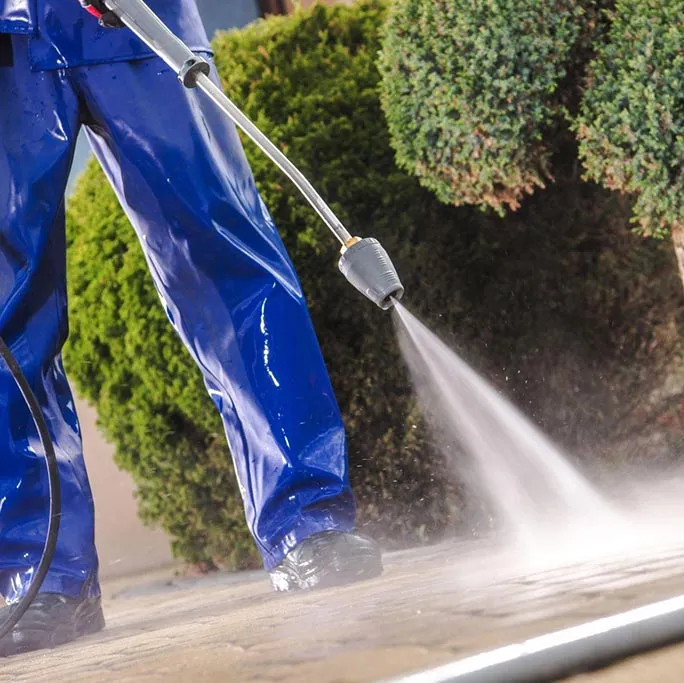
Using commercial-grade pressure washing equipment (typically 3,000 to 4,000 PSI), the surface is systematically cleaned. A rotary surface cleaner attachment is often used for flat areas — this provides an even clean without the striping pattern that a standard lance can leave. Edges, corners, and expansion joints are cleaned with a targeted lance.
Step 3: Detailing and rinse
Problem areas get additional attention. Stubborn oil stains may need a second application of degreaser. Moss in joints between pavers is blasted out. The entire area is then rinsed to remove loosened debris and cleaning residue.
Step 4: Optional sealing
For concrete driveways, applying a sealer after cleaning protects the surface from future staining and makes ongoing maintenance much easier. Sealed concrete resists oil penetration, reduces moss growth, and maintains its colour for longer. If you are interested in concrete sealing, our concrete polishing and sealing team can advise on the best product for your surface.
Different Driveway Materials and How They Are Cleaned
Not all driveways are created equal. The cleaning approach varies depending on the material:
| Material | Common Issues | Cleaning Approach |
|---|---|---|
| Plain concrete | Oil stains, tyre marks, mould, discolouration | High pressure cleaning with degreaser pre-treatment. Responds very well to pressure washing. |
| Exposed aggregate | Moss in recesses, dirt buildup between stones, fading | Moderate pressure to avoid dislodging aggregate. Pre-treatment for moss. Sealing recommended to protect the finish. |
| Pavers (clay or concrete) | Moss and weeds in joints, lichen, sand loss | Pressure cleaning followed by re-sanding of joints. Avoid excessive pressure on older, softer pavers. |
| Asphalt | Oil stains, fading, loose surface | Lower pressure settings to avoid damaging the surface. Pre-treatment for oil. Limited improvement possible on heavily degraded asphalt. |
| Stamped concrete | Wear on pattern, dirt in texture, fading colour | Moderate pressure with a surface cleaner. Re-sealing after cleaning restores colour and protects the pattern. |
How Often Should You Clean Your Driveway in Melbourne?
The answer depends on your property, but as a general rule:
- Annually: Most Melbourne driveways benefit from a professional clean once a year. Spring is an ideal time — it clears the moss and mould that built up over winter and removes pollen and leaf debris from autumn.
- Every 6 months: Driveways under heavy tree cover, in shaded positions, or with regular vehicle traffic may need cleaning twice a year.
- Before selling: A clean driveway makes a strong first impression. If you are preparing your property for sale, driveway cleaning should be part of your pre-sale preparation alongside the house itself.
- After building work: Construction dust, paint drips, and mortar splashes are much easier to remove when addressed promptly.
Melbourne’s seasonal pattern matters here. Winter brings rain, shorter days, and less sun — conditions that encourage moss growth. Spring warmth and pollen create a fresh layer of grime. Summer dust and heat bake stains into the surface. A well-timed clean in early spring catches the worst of it.
DIY Driveway Cleaning vs Professional Service
A domestic pressure washer from the hardware store can handle light surface dirt and will give you a noticeable improvement. However, there are several reasons why a professional service delivers a significantly better result:
- Pressure difference: Domestic units typically operate at 1,500 to 2,000 PSI. Commercial units run at 3,000 to 4,000+ PSI with much higher water flow. This makes a dramatic difference on ingrained stains, moss, and oil.
- Surface cleaner attachments: Professionals use rotary surface cleaners that provide an even, streak-free finish across large areas. A standard lance leaves visible stripes.
- Chemical pre-treatment: Professional-grade degreasers, mould treatments, and rust removers are more effective than retail products and are applied correctly for each stain type.
- Time and effort: A professional team can clean a standard two-car driveway in 1 to 2 hours. The same job with a domestic unit takes most of a day and delivers a noticeably inferior result.
- Surface knowledge: Different materials require different pressures and techniques. Too much pressure on exposed aggregate or old pavers can cause damage. Professionals adjust their approach to the surface.
DIY works well for spot-cleaning fresh spills and maintaining a surface between professional cleans. For the annual or bi-annual deep clean, professional equipment makes a clear difference.
Frequently Asked Questions
Can pressure cleaning damage my driveway?
When done correctly with appropriate pressure settings, professional pressure cleaning will not damage your driveway. Problems occur when excessive pressure is used on soft or degraded surfaces — this is why a professional assessment of the surface type matters before starting. Our IICRC-certified team adjusts pressure, nozzle selection, and technique to suit each material.
Will pressure cleaning remove oil stains completely?
Fresh oil stains usually come out completely. Older stains that have soaked deep into porous concrete may lighten significantly but not disappear entirely. Pre-treatment with a professional degreaser before pressure washing gives the best result. Sealing the surface after cleaning prevents future oil from penetrating.
How long does it take for a driveway to dry after cleaning?
In typical Melbourne conditions, a pressure-cleaned driveway will be dry enough to walk on within 1 to 2 hours and ready for vehicle traffic within 4 to 6 hours. If sealer is applied, drying times vary by product — your technician will advise on when the surface can be used.
Need professional cleaning help?
Our IICRC-certified team services all Melbourne suburbs. Get a free, no-obligation quote today.
IICRC-certified cleaning professionals serving all Melbourne suburbs since 2014.