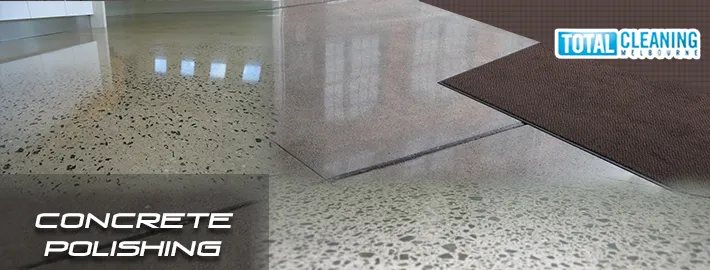
Polished concrete floors are a fixture of Melbourne living. From warehouse conversions in Collingwood to new builds in the outer suburbs, from cafes and restaurants to retail fitouts, polished concrete offers a durable, low-maintenance floor that looks sharp for years. But when it comes time to restore, re-polish, or seal an existing concrete floor, one of the first questions is always: how much will it cost?
This guide breaks down the factors that influence concrete polishing costs in Melbourne, explains the strip-polish-seal process that Total Cleaning Melbourne uses, and gives you a practical understanding of what to budget for your project.
What Affects the Cost of Concrete Polishing?
Concrete polishing is not a one-size-fits-all job. The price depends on several factors that are specific to your floor and property:
Floor area
This is the most obvious factor. Larger areas cost more in total but tend to have a lower per-square-metre rate because setup and mobilisation costs are spread across a bigger surface. A small residential garage will have a higher per-square-metre cost than a large open-plan warehouse floor.
Current condition of the floor
A floor that has been maintained and just needs a refresh and re-seal will cost less than one with heavy staining, old sealant that has yellowed or flaked, or surface contamination from grease or paint. Floors with existing coatings need to be stripped back before the polishing process can begin, which adds time and cost.
Number of coats
The strip-polish-seal process involves applying multiple coats of sealant. A standard residential job might involve 2 to 3 coats, while a high-traffic commercial floor may need 4 or more coats to achieve the necessary durability. More coats mean more product, more drying time, and a higher cost.
Finish type
The type of finish you want affects the process and therefore the price:
- Matte finish: A subtle, natural-looking result with a low sheen. This is the most straightforward finish and generally the most affordable.
- Satin finish: A mid-level sheen that provides some reflectivity without the full mirror effect. Popular in residential settings.
- High-gloss finish: A reflective, polished look that is popular in commercial spaces, showrooms, and modern homes. Achieving a high gloss requires additional polishing passes and typically costs more.
Access and logistics
A clear, empty room is easier and faster to work with than a space where furniture needs to be moved, or where access is restricted by stairs, narrow doorways, or other obstacles. Upper-floor apartments with no lift access, for example, add complexity to getting equipment in.
The Strip-Polish-Seal Process Explained
At Total Cleaning Melbourne, our concrete polishing service follows a proven strip, clean, polish, and seal process. Here is what each stage involves:
Stage 1: Stripping
If the floor has an existing sealant or coating, it needs to be stripped back to bare concrete first. This is done using professional-grade stripping solutions that dissolve the old coating, which is then scrubbed and extracted. Stripping removes yellowed, flaking, or uneven old sealant so the new finish adheres properly and looks even.
Floors that have never been sealed, or where the old sealant has worn away completely, may not need a full strip — a thorough clean is sufficient.
Stage 2: Cleaning
Once stripped, the floor is deep cleaned to remove any remaining residue, stains, grease, or contaminants. This step is critical because anything left on the surface will be locked in under the new sealant. We use professional-grade cleaning solutions and mechanical scrubbing to ensure the concrete is completely clean and ready to accept the new finish.
Stage 3: Polishing
The concrete surface is polished using specialised buffing equipment to create a smooth, even surface. The level of polish determines the final sheen — from a matte finish with minimal polishing to a high-gloss finish that requires multiple passes. Polishing also helps to close the pores of the concrete, making the final seal more effective.
Stage 4: Sealing
The final stage is applying the sealant. This is typically done in multiple coats, with drying time between each coat. The sealant protects the concrete from staining, moisture penetration, and wear. It also gives the floor its final appearance — whether that is a natural matte or a reflective gloss.
Each coat needs adequate drying time before the next is applied. Rushing this process results in a poor finish. A standard job with 2 to 3 coats typically takes 1 to 2 days including drying time.
Typical Cost Ranges for Melbourne Properties
Every job is quoted individually based on an on-site assessment, but these general ranges give you a starting point for budgeting:
| Property Type | Typical Scope | Key Cost Factor |
|---|---|---|
| Residential garage | Strip, clean, seal (2-3 coats) | Usually a straightforward job. Oil stains may need extra pre-treatment. |
| Open-plan living area | Strip old coating, polish, seal (2-3 coats) | Furniture removal and protection of adjacent surfaces add to the scope. |
| Warehouse conversion | Strip industrial coating, clean, polish, seal | Larger area lowers per-sqm cost, but industrial coatings can be harder to strip. |
| Cafe or retail space | Strip, polish to high gloss, seal (3-4 coats) | High-gloss finish and extra coats for durability in high-traffic areas. |
| Re-seal only | Light clean, apply 1-2 coats of sealant | The most affordable option when the floor is in good condition and just needs freshening up. |
The best way to get an accurate quote is to have us inspect the floor. We will assess the condition, discuss the finish you want, and provide a clear quote before any work begins. Contact us through our concrete polishing service page or call directly.
When to Re-Seal Your Concrete Floor
Concrete sealant does not last forever. How long it lasts depends on traffic, cleaning methods, and the quality of the original application. Here are the signs that your floor needs re-sealing:
- Water no longer beads on the surface — when you splash water on a well-sealed floor, it should bead up rather than soak in. If it absorbs into the concrete, the sealant has worn through.
- Dull patches and wear patterns — high-traffic areas wear faster. If you can see clearly where people walk most, the sealant in those areas is depleted.
- Staining more easily — if spills that used to wipe up cleanly are now leaving marks, the sealant is no longer protecting the concrete.
- Yellowing or cloudiness — some sealants yellow over time, particularly in areas exposed to UV light. This is both an aesthetic issue and a sign the product is degrading.
As a general guide, residential concrete floors typically need re-sealing every 3 to 5 years. Commercial spaces with heavy foot traffic — cafes, retail stores, office lobbies — may need attention every 1 to 2 years. Regular maintenance between seals (appropriate cleaning products, prompt spill cleanup) extends the life of the sealant considerably.
Melbourne Property Types and Concrete Polishing
Polished concrete is everywhere in Melbourne, and each property type has its own considerations:
- Warehouse conversions: Many inner-city conversions in suburbs like Fitzroy, Collingwood, Richmond, and South Melbourne feature original industrial concrete slabs. These floors often have character — minor imperfections, subtle colour variations — that polishing enhances rather than hides.
- New homes: Concrete slab floors in new builds can be polished and sealed as a cost-effective alternative to timber or tiles. The finish integrates well with the open-plan layouts common in Melbourne’s newer housing estates.
- Cafes and hospitality: Melbourne’s cafe culture means polished concrete is a standard flooring choice in food and beverage venues across the city. High foot traffic and the risk of spills make regular maintenance and re-sealing important.
- Retail and commercial: Showrooms, gyms, and office spaces benefit from the durability of sealed concrete. For commercial properties, we can discuss maintenance schedules that keep the floor looking professional year-round.
If your concrete floor also has tile sections or grout lines that need attention, we can often address both in the same visit.
Frequently Asked Questions
How long does the concrete polishing process take?
A standard residential floor (one room or garage) typically takes 1 to 2 days including stripping, cleaning, polishing, and drying time between sealant coats. Larger commercial floors may take 2 to 4 days. We will provide a clear timeline with your quote so you can plan around the work.
Can you polish concrete floors in occupied homes?
Yes, though the room being worked on needs to be cleared of furniture and ideally isolated from the rest of the house during the process. Sealant fumes are minimal with modern products, but we recommend good ventilation during and after application. We work room by room where needed so you can continue using the rest of your home.
What is the difference between polishing and sealing?
Polishing is the mechanical process of buffing the concrete surface to create smoothness and sheen. Sealing is the application of a protective coating over the top. Most jobs involve both — polishing creates the look, and sealing protects it. A re-seal (without full polishing) is a lower-cost maintenance option when the floor just needs freshening up.
Need professional cleaning help?
Our IICRC-certified team services all Melbourne suburbs. Get a free, no-obligation quote today.
IICRC-certified cleaning professionals serving all Melbourne suburbs since 2014.