Water damage can appear fast and silently, turning a peaceful Melbourne home into a stressful emergency. When damp patches show on your walls or ceilings, most homeowners ask the same urgent question: who should I call for water damage in walls? Acting quickly is essential - every hour of delay increases the risk of mould, structural damage, and costly repairs. This guide explains who to call, what to expect, and the critical first steps after discovering water damage in your walls.
Understanding the Scope: What Counts as Water Damage in a Wall
Water damage in walls can come from many sources, including burst pipes, leaking appliances, condensation, roof leaks, overflowing gutters, or sewer backups. Melbourne’s weather - particularly heavy summer storms - can also push water into walls and ceilings unexpectedly.
Signs to watch for include:
- Discolouration or bubbling paint
- Soft, spongy, or warped wall surfaces
- Musty odours or visible mould growth
- Peeling wallpaper or crumbling plaster
- White mineral deposits (efflorescence) on masonry
- Slimy residue or dark staining
When you spot these signs, act without delay. Early intervention helps you choose the right professional, limits further damage, and reduces remediation costs significantly.
Who to Call: Matching the Right Professional to the Problem
Not every water damage situation requires the same expert. In Melbourne, different professionals handle different parts of the problem:
Plumbers address the source. Call a licensed plumber for a burst pipe, faulty valve, leaking appliance, or damaged water supply line. They stop the water and repair the cause before any drying or restoration can begin.
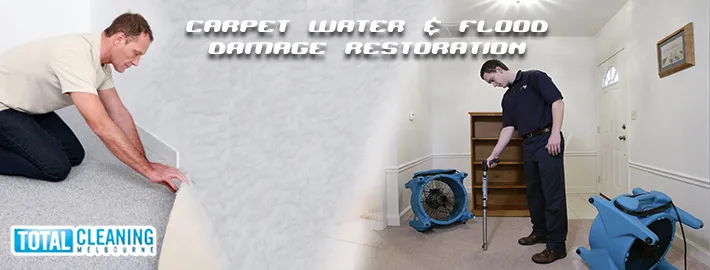
Water damage restoration specialists take over once the water supply is controlled. They use dehumidifiers, air movers, moisture metres, and thermal imaging cameras to dry wall cavities and prevent mould from taking hold. Our flood water damage restoration team at Total Cleaning Melbourne provides exactly this service across Melbourne.
Emergency clean-up crews step in when water makes a space unsafe - extracting standing water, securing hazards, and stabilising the environment.
Mould remediation experts are necessary if mould has already formed or is likely to develop due to prolonged moisture exposure.
Builders and carpenters handle structural repairs - replacing damaged drywall, insulation, or wall studs - once the area is fully dried and certified clean.
In many cases, a professional flood damage restoration service in Melbourne handles every stage: extraction, drying, mould prevention, sanitising, and repair coordination.
What to Do Immediately After Discovering Water Damage
Time is your most valuable asset when dealing with water damage. Follow these steps as soon as you discover a problem:
- Ensure safety first. Turn off power at the main switchboard if you suspect electrical risks near the wet area.
- Stop the source. Shut off the main water supply or turn off the faulty appliance if possible.
- Document everything. Take photos and video of the damage before touching or moving anything - this is essential for insurance claims.
- Limit the spread. Move furniture away from affected walls, place towels to contain leaks, and protect valuables from further exposure.
- Call a professional immediately. Contact a trusted flood water damage restoration specialist in Melbourne who offers 24/7 emergency response.
Do not remove large sections of wet wall yourself. Disturbing saturated materials can spread mould spores throughout your home and make the situation significantly worse.
What to Expect from a Professional Water Damage Response
A reputable Melbourne water damage restoration process follows a structured series of steps:
- Initial inspection: A qualified technician assesses the damage, identifies the moisture source, and uses metres to map the extent of water penetration.
- Source control: The team ensures the water supply is stopped or coordinates with your plumber.
- Water extraction: Commercial pumps and wet vacuums remove standing water rapidly.
- Drying and dehumidifying: Industrial-grade air movers and dehumidifiers run continuously to dry wall cavities and subfloors, preventing mould growth.
- Cleaning and sanitising: Affected surfaces are treated with antimicrobial products to kill bacteria and inhibit mould.
- Mould prevention and remediation: If mould is present or at risk, a specialist applies containment and treatment protocols.
- Repairs and restoration: Once moisture readings confirm the area is fully dry, damaged drywall, insulation, and structural elements are repaired or replaced.
Choosing an experienced local provider ensures a smooth, efficient response that minimises downtime and long-term costs.
How to Choose the Right Water Damage Service Provider in Melbourne
With many providers available, look for these qualities when selecting a restoration team:
- Certifications: Choose teams with IICRC (Institute of Inspection, Cleaning and Restoration Certification) or equivalent water damage training.
- Local experience: Melbourne-based teams understand local building styles, weather patterns, and council requirements.
- Fast response: Quick arrival is critical. Ask about 24/7 emergency availability and typical response times.
- Full-service capability: A provider that manages everything from extraction to repairs reduces delays and simplifies communication.
- Insurance assistance: Teams who provide detailed moisture reports, documented timelines, and photographic evidence make insurance claims far easier to process.
Insurance and Aftercare: What to Keep Ready
Navigating insurance after water damage can feel overwhelming. Prepare these documents as early as possible:
- Photos and videos of the damage (taken before any clean-up)
- A clear written timeline of when the damage was discovered and what steps you took
- Notes from all phone calls or emails with plumbers and restoration teams
- Written reports and moisture readings from your restoration technician
Your insurer will want confirmation that you acted promptly and engaged qualified professionals. A reliable restoration team will provide all necessary documentation to support your claim.
After the walls are dried and repaired, monitor the area for several weeks. If musty smells return or new staining appears, contact your provider immediately for a follow-up inspection.
Frequently Asked Questions
Q: Can I dry out water-damaged walls myself?
You can manage minor surface moisture with fans and open windows, but water inside wall cavities requires professional equipment such as industrial dehumidifiers and air movers. DIY drying rarely removes moisture from within the wall structure, which means mould is likely to develop behind the surface weeks later.
Q: How quickly does mould grow after water damage?
Mould can begin to develop within 24 to 48 hours in a moist, warm environment. Melbourne’s humidity - particularly in summer - accelerates this process. This is why calling a professional as soon as you notice water damage is so important.
Q: Does water damage in walls always require wall replacement?
Not always. If the affected area is caught early and dried thoroughly, the wall material may be salvageable. However, if drywall has absorbed significant moisture or mould is present, affected sections typically need to be removed and replaced to ensure a safe and clean result.
Water damage in walls is common and can be costly, but fast action and the right professional help can protect your home and your budget. Total Cleaning Melbourne provides trusted flood water damage restoration services across Melbourne, including emergency response, thorough drying, mould prevention, and full documentation for insurance.
Contact us today to speak with our team about your water damage situation - we’re here to help you get your home back to normal as quickly and safely as possible.
For specialist wall and structural water damage requiring extended drying programs or insurance-managed restoration, visit our dedicated flood division at Total Flood Damage Melbourne.
IICRC-certified cleaning professionals serving all Melbourne suburbs since 2014.