Late spring in Melbourne means sunshine, open windows, and friends dropping by for long lunches. It also means your kitchens, bathrooms, and laundries are under bright light that shows every bit of dull grout, soap scum, and limescale. If your mop is not cutting it, you are not imagining things. Grout is porous and it holds onto grease, shampoo residue, and micro grit that regular cleaning cannot fully remove. So, is professional tile and grout cleaning worth it before summer entertaining? In most Melbourne homes, yes. Here is why, how it works, and what to expect when you book with Total Cleaning Melbourne.
Why Grout Looks Dirty Again After You Mop
If you clean often but your grout still looks grey, the problem is residue migration. Mopping lifts surface soil and then pushes a fine slurry into grout lines. As water evaporates, the suspended dirt and soap film settle deeper into the pores. Each cleaning cycle leaves a little more behind, which is why grout re-dirties fast after mopping. Humidity in bathrooms and laundries also feeds mould and mildew, especially in poorly ventilated corners and around shower bases.
Over time, even light-coloured porcelain tiles can look flat due to mineral deposits from Melbourne’s water supply. A periodic deep clean resets the surface so routine mopping actually works effectively again - rather than perpetuating the soil accumulation cycle.
Melbourne Hard Water and Your Grout
Melbourne’s water supply contains dissolved minerals - particularly calcium and magnesium - that leave behind deposits each time water dries on tile and grout surfaces. In bathrooms and laundries, where tiles are repeatedly exposed to water, these minerals gradually accumulate inside grout pores and form a chalky, whitish film on tile surfaces. Over months and years, the combination of mineral deposits, soap scum, and biological growth creates a compacted layer that household cleaning products struggle to penetrate.
The effect is particularly noticeable in suburbs with older plumbing or in homes where water sits on grout for extended periods - around shower bases, behind taps, and along bath edges. Hard water deposits also alter the texture of grout, making it rougher and more prone to trapping dirt. Professional tile and grout cleaning addresses this mineral build-up directly, using temperature and chemistry that dissolve what household mopping simply cannot reach. For homes with persistent hard water staining on other hard floor surfaces, our concrete polishing service can address similar mineral build-up on polished concrete and sealed stone.
DIY Methods vs Professional Results
You can improve tiles and grout yourself for light maintenance. A gentle pH-neutral floor cleaner and a soft grout brush help. Baking soda can add mild abrasion for greasy spots in the kitchen. Yet there are meaningful limits to what home methods can achieve.
What should you not clean grout with? Avoid chlorine bleach on coloured grout - it can cause fading and brittleness over time. Skip harsh acids on natural stone tiles such as marble or travertine, as they can etch the surface permanently. Steel wool and abrasive pads will scratch glazed tiles and should be avoided.
Does vinegar really clean grout? White vinegar cuts soap scum effectively on many ceramic and porcelain tiles. However, it is acidic, which means it can damage natural stone tiles and some cement-based grouts over time. Use it sparingly on suitable tile types only, rinse thoroughly, and test in a hidden area first. For a full grout restoration, vinegar is insufficient regardless of tile type.
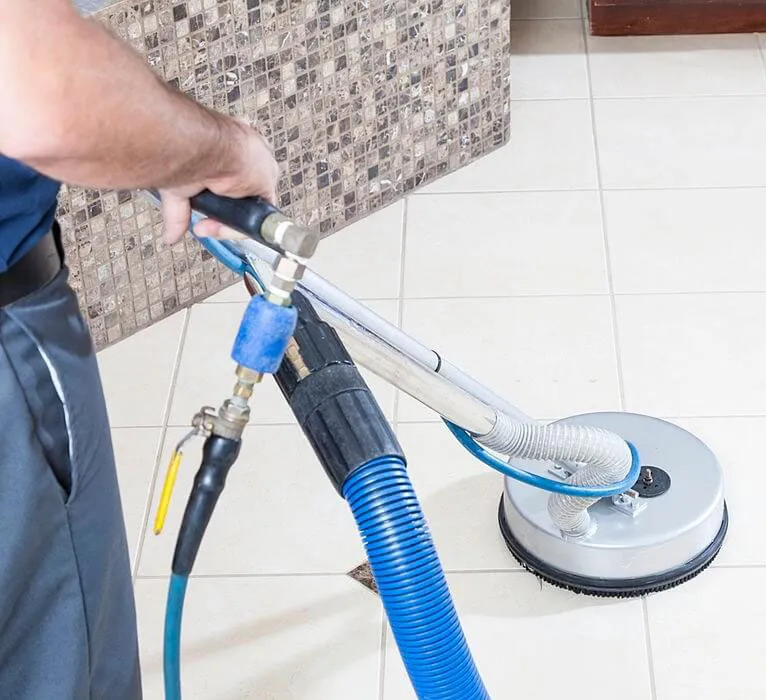
Professional tile and grout cleaning in Melbourne uses hot-water extraction and rotary agitation to break the residue cycle. High-temperature water and targeted detergents release embedded grime. A sealed vacuum head extracts the dirty solution right out of the grout instead of pushing it further in. Stubborn mould along silicone edges is treated with the appropriate chemistry and dwell time, then carefully rinsed. The result is brighter grout lines and tiles that feel genuinely clean underfoot.
How Total Cleaning Melbourne Cleans Your Tiles and Grout
When you book our tile and grout service across Melbourne, here is what to expect:
1. Inspection and testing - We identify tile type, grout condition, and existing sealers, then test a small area to confirm the safest and most effective approach for your specific surfaces.
2. Pre-treatment - A grout-safe detergent or alkaline cleaner is applied to dissolve body oils, soap film, and kitchen grease. The pre-treatment is allowed to dwell for the appropriate contact time before agitation begins.
3. Agitation - We use grout brushes and rotary machines to lift soils from pores and textured surfaces, physically dislodging contamination that chemistry alone cannot release.
4. Steam and extraction - Hot-water extraction rinses at controlled pressure with immediate vacuum recovery, carrying away loosened grime, mould spores, bacteria, and residue.
5. Detailing and edges - Corners, skirting lines, and areas around fixtures receive extra attention so the finished result looks consistent throughout.
6. Rinse and neutralise - We normalise pH after cleaning to help prevent rapid re-soiling and protect the grout chemistry.
7. Resealing advice - If your grout is porous or subject to high traffic, we recommend a penetrating sealer applied to clean, dry grout to slow future staining and make ongoing maintenance significantly easier.
Our methods are family-friendly and designed to avoid harsh residues while delivering a genuine deep clean. You receive a clear explanation on the day, including honest advice about any limitations - such as stained or crumbling grout that may need repair or regrouting rather than cleaning.
Is Professional Tile and Grout Cleaning Worth It?
If you are preparing for summer guests, dealing with persistent mould in wet areas, or noticing patchy grout that never stays bright regardless of how often you clean, professional cleaning is unequivocally worth it. The benefits include:
- A visual reset that DIY cleaning rarely achieves regardless of effort
- Longer-lasting results because residue is removed, not just surface-wiped
- Genuine health benefits in wet areas where mould and biofilm can persist and affect air quality
- A better foundation for grout sealing, which protects your investment in the clean
- Simplified ongoing maintenance - sealed, professionally cleaned grout responds much better to regular mopping
For many Melbourne households, the improvement after professional tile cleaning is immediate and striking, and the subsequent maintenance routine becomes noticeably easier.
How Long Does Professional Grout Cleaning Take?
Time varies by the area size, layout, and condition of the surfaces. As a general guide:
- Small bathroom or laundry: 1 to 2 hours
- Average family bathroom plus ensuite: 2 to 3 hours
- Large kitchen, hallway, and dining zones: 2 to 4 hours
Allow additional time for drying before walking on the surfaces and replacing mats. If you choose grout sealing, allow the cure time advised on the day - typically several hours before the floor is exposed to water.
How Often Should Tile and Grout Be Professionally Cleaned?
For busy Melbourne households, a professional deep clean every 12 to 24 months is a reasonable maintenance schedule. High-use kitchens and heavily used family bathrooms benefit from annual service, particularly if you have hard water, cook regularly, or live with children and pets. Properly sealed grout can stretch the professional cleaning interval, provided you use pH-neutral cleaners for routine maintenance and ensure good ventilation in wet areas.
How Do You Get Grout White Again?
The process starts with proper residue removal - a tailored pre-spray, mechanical agitation, and hot-water extraction to pull accumulated soil from deep within the grout pores. Second, any stains that have chemically bonded with the grout may require targeted treatments beyond standard cleaning. Finally, applying a penetrating sealer to clean grout resists new staining and slows the re-soiling cycle significantly.
If grout is permanently discoloured due to age or chemical damage, recolouring or regrouting may be the appropriate remedy. We are upfront about what cleaning can and cannot restore during the initial inspection so you have clear expectations before work begins.
What to Expect: Before and After Professional Tile Cleaning
When you hire a professional tile and grout cleaning team, the most striking difference is in the grout lines themselves. Grout that appeared permanently grey or discoloured often returns to a shade much closer to its original colour - sometimes dramatically so. Tiles regain their original texture and feel underfoot, and the overall room looks noticeably brighter and fresher. However, it is important to set realistic expectations: grout that has been physically damaged, cracked, or chemically stained over many years may not return to perfect white. Your technician will assess each area during inspection and give you an honest appraisal of what cleaning can achieve versus what may require regrouting or recolouring. Most Melbourne homeowners are genuinely surprised by how much improvement a single professional clean delivers.
Simple Care Tips After Your Professional Clean
- Switch to a pH-neutral floor cleaner and rinse thoroughly after each mop
- Use bathroom squeegees and ensure exhaust fans run during and after showers
- Avoid acid-based cleaners on natural stone or cementitious grout
- Refresh entry mats regularly to reduce grit tracked onto tile surfaces
- Book grout sealing if your grout is porous, to slow re-soiling
- Address any spills promptly - particularly coloured liquids and acidic substances
Frequently Asked Questions
How do I know if my grout needs professional cleaning or regrouting?
If the grout is intact and structurally sound - not crumbling, cracked, or missing - professional cleaning is almost certainly the right first step. Grout that looks dark or discoloured but is physically sound can typically be dramatically improved by professional cleaning. Crumbling, loose, or physically damaged grout requires regrouting, ideally after cleaning the surrounding area.
Can professional cleaning remove mould from shower grout?
In most cases, yes. Professional treatment with appropriate anti-mould agents, combined with high-temperature steam extraction, addresses mould that has established in grout pores. Very deep-seated mould that has discoloured the grout permanently may require regrouting for full resolution. We assess this during inspection and advise accordingly.
Will professional tile cleaning damage my grout sealer?
Professional cleaning is designed to clean the tile and grout without stripping existing sealers where possible. However, very old or degraded sealers may be partially removed during the process, which is actually beneficial as it prepares the surface for fresh sealing. We assess existing sealers during inspection and discuss any implications with you before proceeding.
What areas does Total Cleaning Melbourne service for tile and grout cleaning?
We service residential and commercial properties across the Melbourne metropolitan area. Contact us to confirm availability in your specific suburb and to arrange a quote.
Late spring slots fill quickly as Melbourne households prepare for the summer entertaining season. If you want fresh tiles and brighter grout before the festive rush, book early to secure your preferred date. You can also pair tile and grout cleaning with carpet steam cleaning or other services to address multiple maintenance needs in a single visit. Contact Total Cleaning Melbourne to book your spring shine today - call 1300 424 114 or enquire via our website.
IICRC-certified cleaning professionals serving all Melbourne suburbs since 2014.