What Is Professional Carpet Cleaning in Melbourne?
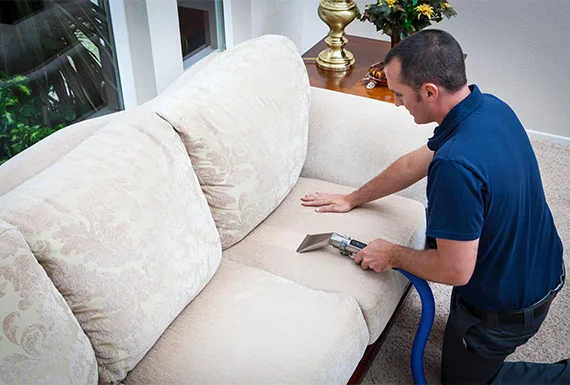
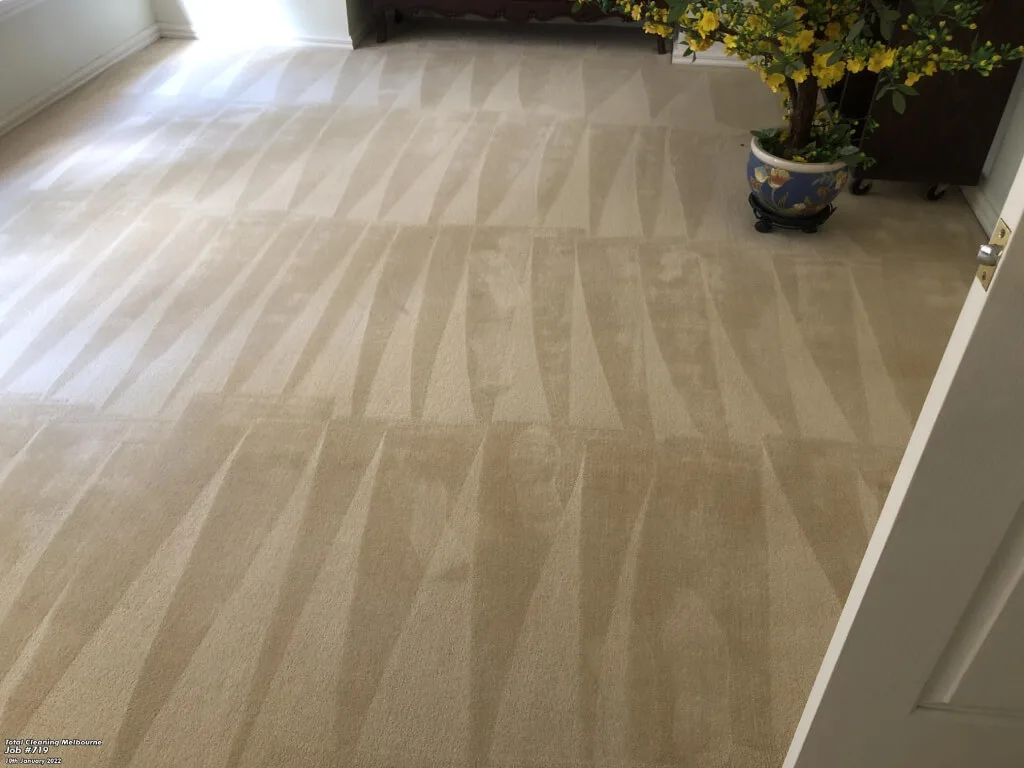
Professional carpet cleaning in Melbourne uses hot water extraction — commonly known as steam cleaning — to remove embedded dirt, allergens, bacteria, and stains from carpet fibres. Our carpet cleaning service covers all carpet types, both residential and commercial, across the Melbourne metropolitan area. The Carpet and Rug Institute confirms hot water extraction removes up to 97% of dirt and bacteria, making it the most effective deep cleaning method available. Same-day service is available for most Melbourne suburbs. Total Cleaning Melbourne’s IICRC-certified technicians service homes, offices, strata, hotels, medical practices, and childcare centres across Melbourne. Our team is fully insured, police-checked, and holds Working With Children clearance for sensitive environments. See our Melbourne carpet cleaning cost guide for a breakdown of what drives price differences between jobs.
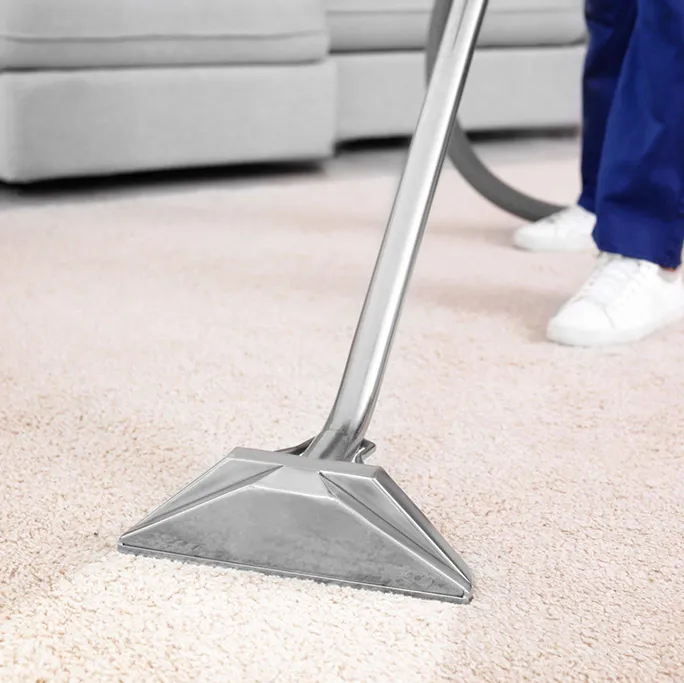 At Total Cleaning Melbourne, we specialise in deep carpet cleaning -- sometimes called carpet shampooing -- that extends the life of your carpets. Our services are designed to meet both residential and commercial needs, offering:
- Pet Stain & Odour Treatment - Eliminate stubborn stains and unpleasant odours from your carpet.
- End-of-Lease Carpet Cleaning - Ensure your property is spotless for tenants or landlords.
- Commercial & Office Carpet Cleaning - Maintain a clean, professional workspace.
- Quick Drying Time - Enjoy fresh, clean carpets without long wait times.
How Does Our Carpet Steam Cleaning Process Work?
- Pre-inspection - Our technician inspects the carpet, identifies the fibre type, and notes any stubborn stains or heavily trafficked areas. We walk through the job with you before any cleaning begins so there are no surprises.
- Pre-vacuuming - We dry-vacuum the entire carpeted area to remove loose surface dirt, pet hair, and debris. This step ensures the steam cleaning process penetrates as deeply and effectively as possible.
- Pre-treatment - A professional pre-spray solution is applied to break down embedded grease, body oils, and staining agents in the carpet pile. High-traffic zones and visible stains receive additional attention at this stage.
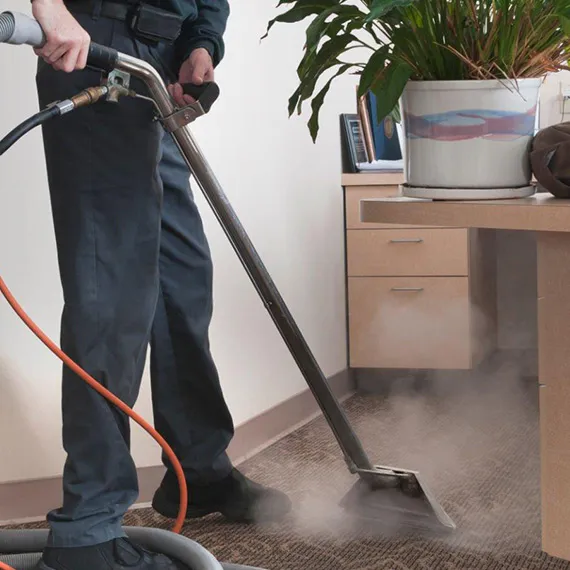
- Hot water extraction (steam cleaning) - Our commercial-grade hot water extraction machine injects a heated cleaning solution under pressure into the carpet fibres, then immediately extracts it along with dissolved dirt, allergens, and bacteria. This is the core of the IICRC-recommended deep cleaning method.
- Post-clean inspection and spot treatment - We inspect the results with you, address any remaining spots, and leave carpets in a near-dry state - typically ready within 2-4 hours in well-ventilated conditions.
What Does Our Carpet Steam Cleaning Service Include?
- Pre-inspection and carpet fibre identification
- Full dry-vacuum of all areas prior to cleaning
- Pre-spray treatment for stains and high-traffic zones
- Hot water extraction clean across all quoted rooms
- Individual spot treatment for stubborn stains
- Pet stain & odour control (additional service where required)
- Post-clean walkthrough and client sign-off
Why Is Professional Carpet Cleaning Worth It?
Depending on your carpet’s condition, we apply the required cleaning stages — from a targeted spot treatment to a full deep carpet clean — to bring it back to a clean, healthy, and fresh-smelling state. Regular professional cleaning also removes allergens such as dust mites, pollen, and pet dander that standard vacuuming cannot reach. The IICRC recommends professional carpet cleaning every 12-18 months for households with average traffic, and more frequently for homes with pets, children, or allergy sufferers.
Commercial clients - whether an office, retail business, community centre, or care home - can benefit from a tailored solution for both upholstery cleaning and carpets, including a maintenance plan if required.
Trust our IICRC-certified, fully insured, and police-checked team to deliver professional results. For delicate carpet types or areas unsuitable for steam, speak to our team about the best method for your situation.
Why Choose a Professional Carpet Cleaner in Melbourne?
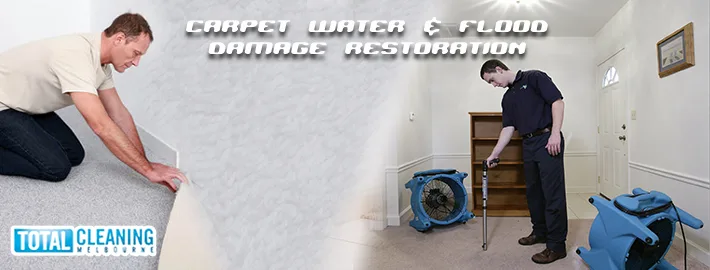
Melbourne’s variable climate - humid summers and cool, damp winters - creates ideal conditions for dust mites, mould spores, and allergens to build up deep in carpet fibres. DIY hire machines typically lack the water temperature, extraction pressure, and suction power of professional equipment, which can leave carpets wetter than intended and at risk of mould growth underneath. A certified technician with commercial-grade equipment delivers a deeper result, faster drying, and peace of mind that the job is done safely and correctly. If your carpet has been affected by flooding or a water damage event, standard steam cleaning alone is not sufficient — our flood water damage restoration service includes wet carpet extraction, structural drying, and moisture monitoring.
Where Do We Offer Carpet Steam Cleaning in Melbourne?
We provide carpet steam cleaning across the Melbourne metropolitan area, including Melbourne CBD, Toorak, Brighton, Hawthorn, Camberwell, Box Hill, Doncaster, Templestowe, Glen Waverley, Narre Warren, and Pakenham. Same-day service is available for most inner and middle suburbs.
Commercial Carpet Cleaning in Melbourne
We provide commercial carpet cleaning across Melbourne for offices, retail and shopfronts, strata buildings, hotels, medical practices, childcare centres, schools, and aged care facilities. Commercial carpet carries heavier soiling than residential carpet — foot traffic loads from hundreds of visitors per day, spilled coffee, ground-in grit, and regulatory hygiene expectations all mean carpet care has to match the environment.
Who we work with:
- Offices and professional practices - scheduled cleans that protect first impressions on client arrival and keep staff working in a healthy environment
- Retail and shopfronts - entry-mat to back-of-house cleans timed outside trading hours
- Strata and apartment buildings - common-area carpets, lift lobbies, corridors, and amenity rooms on a scheduled cycle
- Hotels - guest-room and corridor cleaning on a rotating basis, with overnight work available
- Medical practices and allied health - waiting rooms, treatment rooms, and corridors with infection-control aware cleaning
- Childcare centres and schools - play-area and classroom carpet with child-safe products and scheduling around term breaks
- Aged care facilities - resident room and common-area cleaning with resident welfare and access accommodation built into scheduling
Certifications that matter for commercial sites:
Our team is IICRC-certified, fully insured, police-checked, and holds Working With Children (WWC) clearance — a non-negotiable for childcare centres, schools, and many medical settings under Victorian regulations. Site-specific compliance (inductions, swipe access, COVID-safe protocols where still required) is accommodated.
Scheduling and after-hours work:
We work around your business hours where disruption to operations is a concern. Evenings, overnights, and weekends are available. After-hours work attracts after-hours rates, quoted transparently before booking. Ongoing maintenance contracts with scheduled cleans (monthly, quarterly, or per-term for schools) are available at agreed rates.
For full-service commercial cleaning beyond carpet — including office cleaning, retail and shop cleaning, or a comprehensive commercial cleaning program — we provide a single point of contact for facility maintenance.
Wool Carpet Cleaning
Wool is a premium carpet fibre that rewards careful cleaning but punishes harsh products. Standard residential carpet shampoo solutions can cause wool to shrink, felt, or experience dye migration if water temperature and pH are not controlled. Our wool carpet cleaning process uses pH-neutral cleaning solutions formulated for protein fibres, controlled water temperature (lower than synthetic carpet cleaning), and reduced dwell time before extraction. We test an inconspicuous area first, particularly on older wool carpets or hand-knotted rugs where dye stability is uncertain. Wool carpets take slightly longer to dry than synthetics; we advise honestly on drying time and ventilation during the quote. We clean all common wool carpet types including pure wool, wool-blend, Berber, loop pile, and cut pile, as well as wool rugs and runners.
Pet Urine Treatment — Topical and Pad Extraction
Pet urine is one of the most persistent contamination problems in carpet. Surface treatment alone often leaves odour and bacteria behind because urine penetrates through the carpet pile into the underlay pad, and in severe cases into the sub-floor below. We offer two levels of pet urine treatment:
- Topical treatment - for fresh, surface-level accidents. The affected area is pre-sprayed with a targeted enzyme-based solution that breaks down the uric acid crystals that cause lingering odour, then extracted with hot water. Appropriate for recent, localised accidents and light contamination.
- Pad extraction - for saturated, older, or repeat-accident areas. A specialised sub-surface extraction tool is pressed into the carpet to flush the underlay pad with cleaning solution, then extract contamination from the pad layer itself. This reaches contamination that topical treatment cannot. Severe sub-floor contamination may require pad replacement, which we will advise on after inspection.
Our technician assesses each pet urine issue honestly during the initial inspection and recommends the appropriate level. For broader pet stain and odour control beyond carpet — including upholstery, mattresses, and rugs — see our dedicated service.
Pre-Vacuum as Standard
Every carpet steam clean includes a pre-vacuum pass as standard. We dry-vacuum the entire carpeted area before any wet cleaning begins so that dry soil, pet hair, and grit are removed before hot water extraction. Skipping this step is one of the most common mistakes in DIY carpet cleaning — wet-extracting over dry soil creates muddy residue that wicks back to the surface as the carpet dries. For ongoing commercial vacuum cleaning as part of regular office or shop maintenance (rather than as preparation for a steam clean), see our office cleaning, shop cleaning, and commercial cleaning services.
Related Reading
- What to Expect During Carpet Cleaning Service — step-by-step walkthrough of our hot water extraction process
- Reliable Carpet Cleaning for Allergy-Free Living in Melbourne — how steam cleaning removes dust mites, pet dander, and allergens
Frequently Asked Questions
How long does carpet steam cleaning take?
A standard three-bedroom home typically takes two to three hours from start to finish. Drying time is usually two to four hours, depending on ventilation, carpet thickness, and weather conditions. Opening windows and running a fan after the service helps speed up drying considerably.
Is carpet steam cleaning safe for children and pets?
We use professional-grade cleaning solutions. We recommend keeping children and pets off freshly cleaned carpet until it has fully dried — typically two to four hours with good ventilation. Contact us if you have specific product concerns.
Can you remove pet stains and odours completely?
In most cases, yes - particularly when stains are treated promptly. Older or deeply set stains may require additional pet odour control treatment. Our technician will assess each stain during the pre-inspection and give you a realistic expectation of results before work begins.
Do you offer same-day carpet cleaning in Melbourne?
Yes. Same-day carpet steam cleaning is available for most Melbourne suburbs when you book before midday. Call 1300 424 114 to check availability for your area.
Do you clean wool carpets?
Yes. We clean all carpet types including wool, synthetic, Berber, loop pile, cut pile and commercial carpet tile. Wool requires temperature-controlled hot water extraction and pH-neutral cleaning solutions to protect the fibres from shrinkage and dye migration. Our technician inspects the carpet to confirm wool-safe cleaning conditions before work begins and advises honestly if an older or fragile wool carpet is better suited to a lighter method.
Do you clean commercial carpet for offices, childcare, medical and strata?
Yes. We provide commercial carpet cleaning across Melbourne for offices, retail, strata buildings, hotels, medical practices, childcare centres, schools and aged care facilities. All technicians are IICRC-certified, fully insured, police-checked and hold Working With Children clearance — important for any site that requires visiting staff to meet child-safe standards.
What is hot water extraction?
Hot water extraction is the professional carpet cleaning method commonly known as steam cleaning. Heated water and cleaning solution are injected into the carpet pile under pressure, then extracted along with dissolved dirt, allergens, and bacteria. It is the method recommended by the IICRC and most carpet manufacturers for periodic deep cleaning and is generally preferred over surface-only methods because it reaches dirt embedded at the base of the pile.
Do you offer after-hours commercial carpet cleaning?
Yes. We work around your business hours where required to avoid disrupting operations. After-hours work attracts after-hours rates, quoted transparently before booking. Common schedules include evenings for offices and retail, overnight for hotels and medical practices, and weekends for schools and childcare centres.
Pricing depends on room size, carpet type, property type, and condition. Full-home packages, ongoing maintenance plans, and commercial rates are available on request — call 1300 424 114 or contact us online for a free, no-obligation quote tailored to your property.
Experience cleaner, fresher carpets with Total Cleaning Melbourne. Contact us to schedule your cleaning or request a free quote.