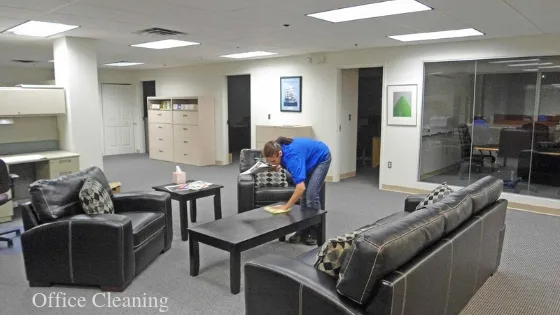
Regular office deep cleaning is often overlooked as an unnecessary expense - but in reality, it is just as important for a workplace as spring cleaning is for a home. Melbourne employees spend a significant portion of their waking hours in the office, and the condition of that environment has a direct impact on their health, wellbeing and productivity. Shared workspaces are particularly vulnerable to germ transfer, meaning that routine surface cleaning alone is rarely enough.
This guide explains why office deep cleaning matters, what a proper top-down deep clean involves, and how often your Melbourne workplace should be professionally cleaned.
Why Routine Cleaning Is Not Enough
Standard office cleaning - vacuuming, bin removal, wiping desks and cleaning bathrooms - handles surface-level mess but does not address hidden contamination. Bacteria and viruses can survive on hard surfaces for hours or even days. Areas like air vents, light fixtures, behind printers and underneath furniture accumulate dust, allergens and pathogens that routine cleaning never reaches.
A professional office cleaning service in Melbourne provides the deeper level of sanitisation that keeps workplaces genuinely healthy - not just visually tidy.
What Does a Deep Clean Cover That Regular Cleaning Does Not?
Understanding the distinction between regular cleaning and a professional deep clean helps Melbourne businesses make informed decisions about their cleaning programme.
Regular cleaning typically includes:
- Vacuuming carpeted areas and mopping hard floors
- Emptying bins and replacing liners
- Wiping desks, tables and benchtops
- Cleaning and restocking bathrooms
- Wiping kitchen surfaces and appliances (exterior)
A professional deep clean goes significantly further:
- Cleaning inside air vents, duct covers and ceiling-mounted returns
- Sanitising behind and underneath all furniture, including desk pedestals and storage units
- Steam cleaning carpets and upholstery to extract embedded dirt and allergens
- Scrubbing tile grout in bathrooms and kitchen areas
- Cleaning inside appliances - microwave interiors, fridge shelves and seals, oven interiors
- Washing light fittings, ceiling fans and high-level surfaces
- Disinfecting all high-touch points including door handles, lift buttons, stair rails and shared equipment
- Cleaning window tracks, frames and internal glass partitions
- Addressing skirting boards, cable management areas and behind equipment
The deep clean addresses everything that accumulates between regular cleaning visits - the material that builds up slowly but creates a significant hygiene burden over time.
Office Deep Cleaning: The Top-Down Approach
A professional deep clean should always proceed from top to bottom. Cleaning higher surfaces first ensures that any dislodged dust and debris falls downward onto surfaces yet to be cleaned.
High-level cleaning begins with ceiling corners, lighting fixtures, air vents and fans. Dust accumulates on these surfaces constantly but is rarely addressed in routine cleaning schedules. A build-up here recirculates through the office air every time the HVAC system runs.
Mid-level cleaning covers walls, wall art, signage, window frames and door surfaces. Fingerprints, marks and allergen deposits on these surfaces are cleaned and sanitised.
Breakroom and bathroom deep cleaning is critical for preventing cross-contamination. A food-safe disinfectant should be applied to all kitchen surfaces including cupboard fronts, handles, microwave interiors, countertops and sinks. Bathrooms require thorough sanitisation of all surfaces, including fixtures and grout.
Floor cleaning is the final stage. Carpets should receive professional steam extraction or another industry-approved method. Hard floors should be dust mopped, vacuumed and then mopped with an appropriate disinfectant.
If your office has air ducts, these should be professionally cleaned separately as part of a comprehensive indoor air quality strategy.
How Often Should Offices Be Deep Cleaned?
There is no single answer - it depends on the nature of your business and several contributing factors.
Foot traffic is the primary consideration. A small office with five employees and minimal visitor traffic has very different needs from a large medical practice with patients entering and leaving throughout the day. More people mean more germ transfer, more surface contamination and a greater need for regular deep cleaning.
Type of business matters significantly. A standard office environment may need a deep clean every quarter. A medical clinic, childcare centre or food service business should be deep cleaned more frequently - often monthly - due to the vulnerability of the people in those spaces and the higher contamination risks involved.
Seasonal factors also influence frequency. During cold and flu season - typically the Melbourne autumn and winter months - increased disinfection is advisable to limit the spread of respiratory illnesses among staff. Wet weather also tracks additional dirt and contaminants into the building.
Most Melbourne offices benefit from a professional deep clean at least twice a year, with many choosing quarterly deep cleans to maintain a consistently high standard of hygiene.
Deep Clean Frequency Guidelines by Business Type
Different Melbourne businesses have different deep cleaning requirements based on the nature of their work, the number of people in the space, and the level of contamination risk. The following guidelines provide a starting point:
| Business Type | Recommended Deep Clean Frequency | Key Considerations |
|---|---|---|
| Standard corporate office | Quarterly (4x per year) | Moderate foot traffic, shared equipment, meeting rooms |
| Medical or dental practice | Monthly | Patient contact, infection control, regulatory compliance |
| Childcare or education | Monthly | Young children, high germ transfer, regulatory requirements |
| Retail showroom or gallery | Quarterly | Public foot traffic, display areas, fitting rooms |
| Co-working or shared office | Monthly to bi-monthly | High turnover of occupants, shared desks and facilities |
| Warehouse with office area | Bi-annually (2x per year) | Dust from warehouse operations, lower office occupancy |
| Food service or hospitality | Monthly or more frequently | Food safety, health inspections, high contamination risk |
These frequencies assume that regular professional cleaning is also being performed between deep cleans. A deep clean is not a substitute for routine maintenance - it supplements it.
The Health and Productivity Case for Office Deep Cleaning
The link between workplace cleanliness and employee health is well established. Employees who work in clean, well-maintained environments report higher job satisfaction, fewer sick days and better concentration. Conversely, workplaces with poor hygiene standards see higher rates of illness-related absenteeism and reduced overall productivity.
Consider the following:
- Sick leave costs - The average Australian employee takes approximately 9.5 personal leave days per year. In workplaces with poor hygiene, this figure is higher. Reducing even one or two sick days per employee per year through better workplace hygiene represents a significant saving for Melbourne businesses.
- Presenteeism - Employees who come to work unwell are less productive and risk spreading illness to colleagues. A cleaner workplace reduces the conditions that promote illness transmission in the first place.
- Morale and retention - Employees notice the cleanliness of their workplace. A well-maintained office signals that the business values its people. Conversely, a visibly neglected office contributes to dissatisfaction and higher staff turnover.
From a business perspective, investing in regular professional deep cleaning is far less costly than managing the downstream effects of widespread illness in the workforce.
Seasonal Deep Cleaning: When Melbourne Offices Need It Most
Melbourne’s distinct seasons create specific cleaning challenges throughout the year. Timing your deep cleans to address these seasonal factors maximises their effectiveness.
Autumn (March-May) - As Melbourne transitions into cooler weather, offices close windows and increase HVAC use. A deep clean at the start of autumn ensures air vents and duct covers are clear before the system runs continuously. This is also the ideal time to address any summer dust accumulation.
Winter (June-August) - Cold and flu season peaks during Melbourne’s winter months. A mid-winter deep clean with emphasis on high-touch surface disinfection helps reduce the spread of respiratory illnesses. Entrance mats and foyer areas need extra attention as wet weather tracks mud and contaminants indoors.
Spring (September-November) - Rising pollen counts make spring a challenging time for employees with allergies. A deep clean that includes upholstery, curtains and vent cleaning reduces the indoor allergen load. This is also a good time to clean window tracks and frames after winter condensation.
Summer (December-February) - Higher temperatures can amplify kitchen and bathroom odours. A pre-holiday deep clean before the Christmas break ensures the office is fresh when staff return in January. The extended closure period over the holidays is also an ideal time for major cleaning work with minimal disruption.
Frequently Asked Questions
Q: What areas are typically missed in standard office cleaning?
The most commonly overlooked areas include air vents and ducts, the area behind printers and monitors, light switches and switchboards, the inside and tops of kitchen appliances, chair undersides and castors, and the backs of furniture. A professional deep clean specifically targets these neglected zones.
Q: Can deep cleaning reduce flu transmission in the office?
Yes. While no cleaning programme can entirely prevent the spread of respiratory illness, professional disinfection significantly reduces the number of viable pathogens on surfaces. Combined with hand hygiene practices and adequate ventilation, regular deep cleaning is one of the most effective measures available to Melbourne employers.
Q: How long does an office deep clean take?
Duration depends on the size of the premises and the scope of work required. A small office of 100-200 square metres may be completed in 3-4 hours. Larger commercial spaces may require a full day or a staged approach over multiple visits. Total Cleaning Melbourne can schedule deep cleans outside business hours to minimise disruption.
Q: Is a deep clean worth the cost for a small Melbourne office?
Absolutely. Even small offices with fewer than 10 employees benefit from periodic deep cleaning. Shared bathrooms, kitchens and equipment accumulate contamination regardless of office size. A bi-annual or annual deep clean is a modest investment that protects staff health and maintains a professional working environment.
Q: Can deep cleaning be done outside business hours?
Yes. Total Cleaning Melbourne regularly performs deep cleans during evenings, weekends and public holidays to avoid disrupting normal business operations. Weekend deep cleans are particularly popular with Melbourne businesses that cannot afford any downtime during the working week.
Office Deep Cleaning Checklist
A thorough office deep clean should cover every area where dust, bacteria, and allergens accumulate. Use this checklist to understand what a professional deep clean includes:
- Desks and workstations: Surface sanitisation, keyboard and mouse cleaning, monitor screens, desk drawers, cable management areas
- Kitchen and breakroom: Countertops, sink, microwave interior and exterior, fridge shelves and seals, cupboard fronts and handles, splashbacks, bin sanitisation
- Bathrooms and amenities: Toilet bowls, seats, and bases; urinals; vanity units; mirrors; tapware; tile and grout; soap dispensers; hand dryers; floor drains
- Air vents and returns: Vent covers removed and cleaned, visible ductwork wiped, filter condition checked
- Floors: Carpet steam extraction for carpeted areas; mopping with professional-grade disinfectant for hard floors; skirting boards wiped
- Windows and glass partitions: Interior glass cleaned, window frames and tracks cleared of dust and debris
- High-touch surfaces: Door handles, light switches, stair railings, lift buttons, shared equipment (printers, photocopiers, coffee machines)
- Ceiling and high-level surfaces: Light fittings, ceiling fans, tops of cabinets and shelving, wall-mounted signage
Total Cleaning Melbourne’s IICRC-certified, fully insured technicians follow this comprehensive approach for every office deep clean. Our team carries professional-grade equipment and products, ensuring a standard of sanitisation that routine cleaning cannot achieve.
For businesses needing regular commercial cleaning beyond periodic deep cleans, see our commercial cleaning services.
Protect Your Team With Professional Office Cleaning
Total Cleaning Melbourne provides professional office deep cleaning services across Melbourne for businesses of all sizes. Whether you need a one-off seasonal deep clean or a regular programme, our experienced team delivers thorough, reliable results.
Contact us today to discuss your office cleaning requirements and get a free quote.
Need professional cleaning help?
Our IICRC-certified team services all Melbourne suburbs. Get a free, no-obligation quote today.
IICRC-certified cleaning professionals serving all Melbourne suburbs since 2014.