Melbourne drivers spend a lot of time in their vehicles - commuting, carpooling, running kids to sport, or navigating weekend road trips - and over time, the interior of any car accumulates odours that regular driving simply cannot clear. Whether it is stale coffee, pet smell, cigarette smoke, or that mysterious musty note that appears after a wet Melbourne winter, persistent car odours are one of the most common complaints during vehicle detailing. The good news is that most car smells can be permanently eliminated with the right approach.
This guide from Total Cleaning Melbourne covers the causes of common car odours and the most effective methods for removing them, from DIY techniques to professional car interior steam cleaning.
What Causes Persistent Car Odours?
Before attempting to remove a car smell, it helps to understand where it is coming from. Masking an odour with an air freshener does nothing to address the underlying cause - and the smell will return within days. Common sources of persistent car odours include:
Upholstery and carpet contamination - Fabric car seats, carpet, and floor mats absorb liquid and biological material over time. Spilled drinks, food residue, and pet accidents soak into the fibres and backing, where they produce odour-causing bacteria. The smell from these sources becomes more pronounced in warm, humid weather - something Melbourne summers reliably deliver.
HVAC system contamination - The car’s air conditioning and ventilation system can harbour mould, mildew, and bacterial growth within the evaporator and ductwork. When the air conditioning runs, it circulates these contaminants through the cabin, producing a musty or stale smell that seems to come from nowhere specific.
Cigarette smoke - Smoke odour is one of the most stubborn to remove. Smoke particles penetrate deep into fabric, headlining, and even plastic and vinyl surfaces, re-releasing the smell gradually over time.
Mould and mildew - Water ingress through a faulty seal or leaving wet items in the car creates conditions for mould growth in carpet and upholstery. Mould produces a distinctive musty odour and is a health concern as well as an aesthetic one.
Pet contamination - Pet hair carries dander and oils, and animals that travel in vehicles regularly leave behind biological material that accumulates in carpet and seat fibres.
Food and drink spills - Coffee, milk, juice, and takeaway food are among the most common odour sources in vehicles used for commuting or family transport. Liquids that soak through carpet into the underlay are particularly problematic because they are invisible from the surface but continue to produce odour for months.
Melbourne-Specific Odour Challenges
Melbourne’s climate and environment create several odour challenges that drivers in other Australian cities may not encounter to the same degree.
Bushfire smoke season - During summer and autumn, smoke from bushfires and planned burns across regional Victoria can permeate vehicle interiors, particularly for drivers in outer eastern suburbs like Lilydale, Healesville, and the Dandenong Ranges. Smoke particles are extremely fine and settle into every fabric surface, vent, and crevice in the cabin. Unlike a contained cigarette smoke problem, bushfire smoke contamination can affect the entire interior simultaneously.
Coastal salt and humidity - Drivers who regularly travel along Port Phillip Bay, the Bellarine Peninsula, or the surf coast bring salt-laden air into the cabin. This moisture accelerates bacterial growth in carpet and upholstery, and the salt itself attracts and holds moisture in fabric fibres, creating persistent dampness that leads to musty odours.
Wet winters - Melbourne’s extended cool, wet season from May through September means vehicles regularly absorb moisture from wet shoes, damp clothing, and rain carried in through open doors. Vehicles parked in shaded areas or enclosed garages where airflow is limited are particularly susceptible to developing a persistent musty smell during winter, as the interior never fully dries out between uses.
Pollen and organic matter - Melbourne’s extensive tree canopy means leaves, pollen, and organic debris regularly enter vehicles and accumulate in door seals, boot areas, and under seats. This organic material breaks down over time, producing a distinctive earthy or rotting odour.
Step 1: Thorough Interior Cleaning
The foundation of any odour removal process is a thorough interior clean. Odour-causing material cannot be neutralised while it is still present in the vehicle.
Remove and clean all removable items - Take out floor mats, seat covers, and any items stored in the car. Floor mats should be vacuumed thoroughly and ideally washed or steam cleaned separately.
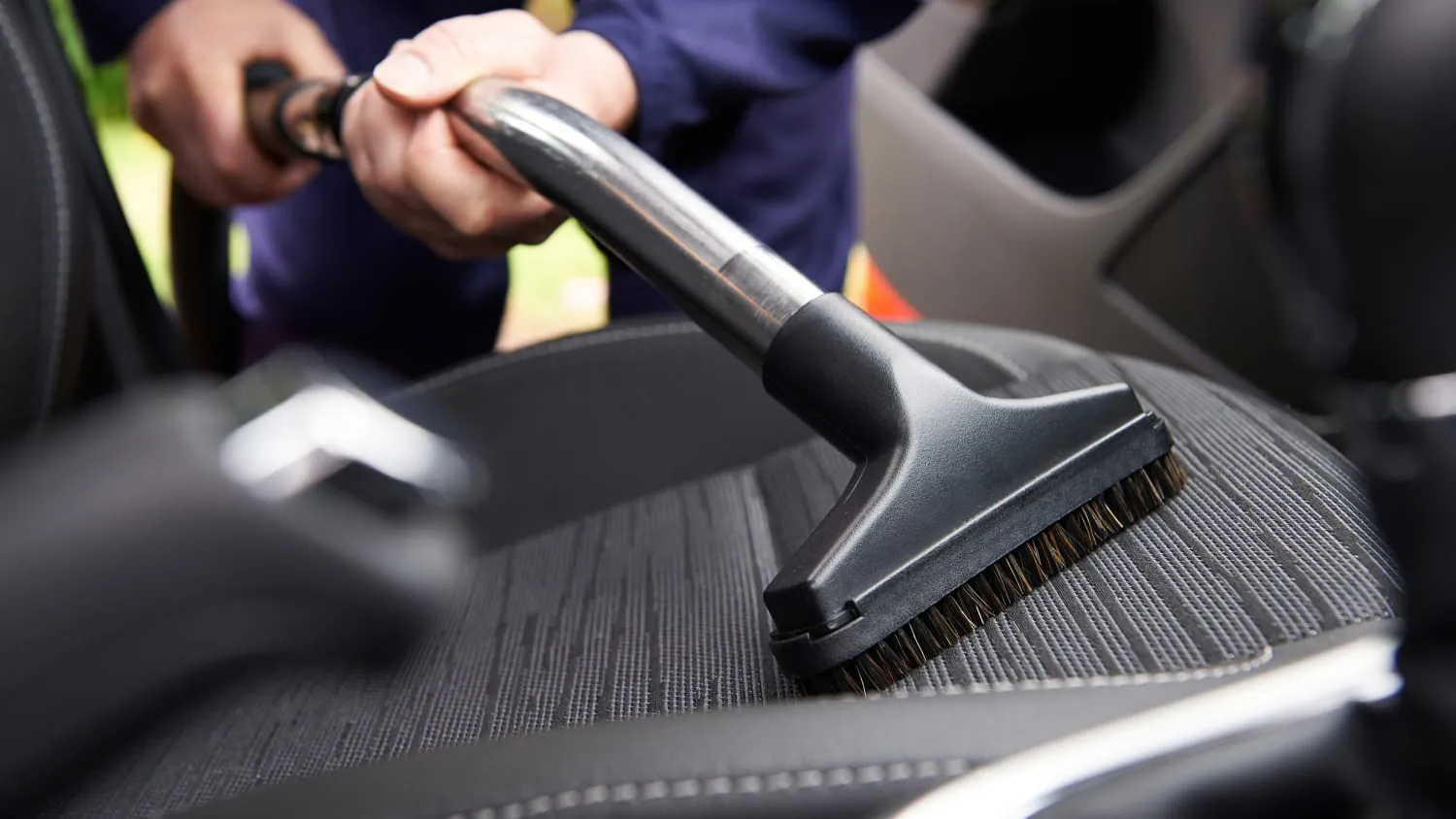
Vacuum all surfaces - Vacuum seats, carpet, and floor areas thoroughly, using a crevice tool to reach under seats and into seat tracks. Pet hair requires special attention - a rubber-bristle brush loosens embedded hair before vacuuming.
Wipe down hard surfaces - Dashboard, door cards, centre console, and trim surfaces all accumulate grime that contributes to odour. Use a damp microfibre cloth with an appropriate interior cleaner to wipe all hard surfaces, including the headlining where accessible.
Clean air vents - Vent grilles trap dust and debris that contributes to that stale-air smell when the HVAC runs. Use a small brush or a dedicated vent cleaning tool to dislodge debris, then follow with a vent-safe antibacterial spray to address any microbial growth within the system.
Step 2: Treat the Specific Odour Source
Once the interior is clean, targeted treatment addresses the specific odour source.
Fabric and carpet odours - Apply a dedicated fabric odour eliminator or enzyme-based cleaner to affected areas. Enzyme-based products break down the organic material producing the smell at a molecular level rather than simply masking it. Allow adequate dwell time as directed, then blot or extract the residue. Ensure the area dries completely - leaving carpet damp creates conditions for mould and worsens the situation.
Cigarette smoke - Wipe all hard surfaces with a cleaner that specifically addresses smoke residue. Fabric surfaces require deep treatment - steam cleaning is the most effective method for removing smoke odour from upholstery and carpet. A professional ozone treatment can be used in severe cases: ozone gas penetrates all surfaces in the vehicle and oxidises the odour-causing compounds, effectively eliminating residual smoke smell.
Mould and mildew - Visible mould growth requires treatment with an appropriate antimicrobial product before cleaning. Once treated and cleaned, the vehicle must be thoroughly dried - a dehumidifier or prolonged airing in dry conditions is necessary to prevent recurrence.
HVAC system odours - A dedicated cabin air filter replacement combined with an HVAC antibacterial treatment (sprayed into the system intake with the fan running) addresses most air conditioning odours. If the smell persists, the evaporator may require professional cleaning.
Pet odours - Pet smells require more than surface cleaning. The oils and biological material that cause pet odour penetrate deep into fabric fibres and carpet backing. Enzyme-based cleaners specifically formulated for pet odour are the most effective DIY option. For persistent pet smells, professional stain treatment and pet odour control using commercial extraction equipment delivers significantly better results than any retail product.
Step 3: Air the Vehicle Thoroughly
Ventilation is a critical but often overlooked step in odour elimination. After cleaning and treating the interior:
- Park the vehicle outdoors in direct sunlight with all doors and windows open for several hours
- Sunlight and fresh air accelerate the drying of any damp surfaces and allow residual product smells to dissipate
- Run the air conditioning with windows open to flush the HVAC system with fresh air
- Avoid closing the vehicle up again until all surfaces are completely dry
Melbourne’s warm, dry weather provides ideal conditions for airing vehicles - take advantage of sunny days for this step. During winter, when dry sunny days are less frequent, park in the most ventilated space available and consider using a portable dehumidifier inside the vehicle overnight to draw out residual moisture.
Professional vs DIY: When to Call in the Experts
For light odours caused by a recent spill or a few weeks of accumulated mess, a thorough DIY clean following the steps above will usually resolve the issue. However, there are situations where professional treatment is genuinely the only effective option:
| Situation | DIY Likely Sufficient | Professional Recommended |
|---|---|---|
| Fresh coffee spill on seat | Yes | No |
| Persistent musty smell after winter | Sometimes | Yes, if mould is present |
| Cigarette smoke in a purchased used car | No | Yes - multiple treatments may be needed |
| Pet odour from regular animal transport | Partially | Yes, for complete elimination |
| Mould visible on carpet or seats | No | Yes - requires antimicrobial treatment |
| Bushfire smoke contamination | No | Yes - ozone treatment may be required |
| Spilled milk that dried in carpet | Sometimes | Yes, if odour persists after DIY clean |
The key difference between professional and DIY odour removal is extraction. Consumer cleaning products can break down odour-causing material, but without commercial extraction equipment, that material remains in the carpet or upholstery - it has been neutralised but not removed. Professional steam cleaning and hot water extraction physically remove the contaminated material from the vehicle.
When Professional Car Interior Cleaning Is the Better Option
For persistent or severe odours - particularly smoke damage, significant pet contamination, or mould - professional car interior steam cleaning delivers results that DIY methods cannot match.
Professional steam cleaning uses high-temperature steam to penetrate deep into fabric fibres, killing bacteria and mould at a level that surface cleaning cannot reach. Commercial extraction equipment removes the contaminated material from the carpet and upholstery rather than leaving it to dry in place. The result is a genuinely clean interior, free from the organic material that causes persistent odours.
Total Cleaning Melbourne’s car interior steam cleaning service covers seats, carpet, floor mats, boot, and all interior surfaces, using professional-grade equipment and appropriate products for each surface type. For vehicles with severe contamination, the service can be combined with carpet steam cleaning techniques adapted for the vehicle environment to ensure thorough treatment of heavily soiled carpet areas.
Frequently Asked Questions
Q: Why does my car smell worse in summer?
Heat accelerates the off-gassing of organic material trapped in carpet and upholstery fibres, which is why a car that seemed fine in winter suddenly smells noticeably unpleasant after Melbourne’s first hot days. The warm, humid interior conditions also accelerate bacterial growth, intensifying odours from existing contamination. This is why a professional interior clean before summer is a worthwhile investment.
Q: Are air fresheners effective for removing car odours?
Air fresheners mask odours temporarily but do nothing to address their source. Once the air freshener dissipates, the original smell returns - often stronger, as the masking effect is no longer present. Genuine odour removal requires cleaning the contaminated material or neutralising the odour-causing compounds with enzyme-based or ozone treatments.
Q: How long does professional car interior steam cleaning take?
A thorough professional car interior steam cleaning service typically takes two to four hours depending on the size of the vehicle and the level of contamination. The vehicle may need additional time to dry fully after treatment - ensure good ventilation and avoid closing the vehicle up before surfaces are completely dry. Total Cleaning Melbourne can advise on timing when you book your service.
Q: Can I prevent car odours from developing in the first place?
Prevention is always easier than treatment. Address spills immediately rather than leaving them to soak in. Remove rubbish and food waste from the vehicle daily. Avoid leaving wet items like gym bags or towels in the car, particularly during Melbourne’s cooler months. Use rubber floor mats that can be removed and washed easily. Keep windows cracked open when parked in a garage to allow airflow. Schedule a professional interior clean at least once or twice a year to remove accumulated contamination before it becomes an odour source.
Q: How do I remove the smell of spilled milk from car carpet?
Spilled milk is one of the most challenging car odours because milk proteins break down rapidly and produce a strong, sour smell that intensifies with heat. Blot as much liquid as possible immediately, then apply an enzyme-based cleaner designed for organic stains. Allow it to dwell for the recommended time, then extract or blot thoroughly. If the milk has soaked into the carpet underlay, a DIY approach may not reach the source - professional steam extraction is typically needed to fully eliminate the odour from deep within the carpet structure.
A clean, fresh-smelling interior transforms the driving experience and protects your vehicle’s value. Total Cleaning Melbourne’s professional car interior steam cleaning service restores even the most contaminated interiors to a clean, odour-free condition. Contact us today to book your car interior cleaning service.
Need professional cleaning help?
Our IICRC-certified team services all Melbourne suburbs. Get a free, no-obligation quote today.
IICRC-certified cleaning professionals serving all Melbourne suburbs since 2014.